How Obama Health Care Legislation Will Impact Individuals and Employers
Immediately
Individuals and employer group plans that wish to keep their current policy on a grandfathered basis can only do so if the only plan changes made are to add or delete new employees and any new dependents. In addition, an exception is made for employers that have scheduled plan changes as a result of a collective bargaining agreement. Once a plan loses its grandfathered status, it will be subject to all of the market reforms in the legislation when they take effect, regardless of where coverage is purchased (either through an exchange or outside of an exchange). However, most of the market -reform provisions slated to take effect in the next six months will apply to all plans, whether or not they hold grandfathered status.
Eligible small businesses (those that have no more than 25 FTEs, pay average annual wages of less than $50,000 and provide qualified coverage) are eligible for phase one of the small business premium tax credit. Small employers will receive a maximum credit, based on number of employees, of up to 50% of premiums for up to two years if the employer contributes at least 50% of the total premium cost.
Employers that provide a Medicare Part D subsidy to retirees will have to account for the future loss of the deductibility of this subsidy in 2013 on liability and income statements. While the elimination of the deductibility does not take effect until 2013, there could be an immediate accounting impact.
In 2010
Temporary reinsurance program for employers that provide retiree health coverage for employees over age 55 begins within 90 days of enactment.
Temporary high -risk pool program for people who cannot obtain individual coverage due to preexisting conditions begins within 90 days of enactment. Employers are prohibited from sending individuals to the high -risk pool, with associated fines.
Group plans will be required to comply with the Internal Revenue Section 105(h) rules that prohibit discrimination in favor of highly compensated individuals (which currently apply to self-insure plans) within six months of enactment.
Lifetime limits on the dollar value of benefits for any participant or beneficiary for all fully insured and self -insured groups and individual plans, including grandfathered plans, are prohibited by current law within six months of enactment. Annual limits will be allowed only through plan years beginning prior to January 1, 2014, only on HHS defined non -essential benefits, and after that be prohibited.
All group and individual plans, including self -insured plans and grandfathered plans, within six months of enactment, will have to cover dependents up to age 26 under current law. Dependents can be married and will also be eligible for the group health insurance income tax exclusion. However, through 2014, grandfathered group plans will only have to cover dependents who do not have another source of employer -sponsored coverage.
All group and individual health plans, including self -insured plans, will have to cover preexisting conditions for children 19 and under for plan years beginning on or after six months after date of enactment. Grandfathered status applies for group health plans.
Health coverage rescissions, within six months of enactment, will be prohibited for all health insurance markets, including self -insured plans and grandfathered plans, except for cases of fraud or intentional misrepresentation.
All group and individual plans, including self -insured plans and grandfathered plans, will have to cover specific preventive care services with no cost -sharing. They also will have to cover emergency services at the in -network level regardless of provider, allow enrollees to designate any in -network doctor as their primary care physician (if they require a primary care physician designation already) and have a coverage appeal process.
Federal grant program for small employers providing wellness programs to their employees will take effect.
In 2011
All employers must include on W2s the aggregate cost of employer -sponsored health benefits, for informational purposes. If an employee receives health insurance coverage under multiple plans, the employer must disclose the aggregate value of all such health coverage, but exclude all contributions to HSAs and Archer MSAs and salary -reduction contributions to FSAs. Applies to benefits provided during taxable years after December 31, 2010.
The tax on distributions from a Health Savings Account that are not used for qualified medical expenses increases from 10% to 20%.
OTC drugs will no longer be reimbursable under HSAs, medical FSAS, HRAs and Archer MSAs unless they are prescribed by a doctor.
Small employers (less than 100 lives) will be allowed to adopt new “simple cafeteria plans.”
All employers would be required to enroll employees in a new national public long -term care program, unless the employee opted out.
All business owners will be subject to new expanded federal income tax requirements on payments of fixed or determinable income or compensation.
The Department of Labor will begin annual studies on self -insured plans using data collected from Form 5500.
In 2012
All group plans and group and individual health insurers (including self -insured plans) will have to provide a summary of benefits and a coverage explanation that meets specified criteria to all enrollees when they apply for coverage, when they enroll or reenroll in coverage, when the policy is delivered and id any material modification is made to the terms of their coverage. The summary and explanation will require substantially more information than current summary plan descriptions and can be provided electronically or in written form. It must be no more than four pages in length with print no smaller than 12 – point font written in a culturally linguistically appropriate manner. There is a $1,000 -per -enrollee fine for willful failure to provide the information.
All group plans (including self -insured plans) and all individual and group carriers will have to annually submit reports to the HHS secretary on whether or not the benefits provided under their plans meet criteria to be established by HHS on improving health outcomes, preventing hospital readmissions, improving patient safety and reducing medical errors, including wellness and health promotion activities. This report also must be provided to all plan participants during the annual open enrollment period and HHS will make the reports publicly available through the Internet. The secretary of HHS can also create and impose fines for noncompliance by employers and plans.
In 2013
New federal premium tax on fully insured and self -insured group health plans to fund comparative effectiveness research program begins. It imposes an annual fee on private insurance plans equal to two dollars for each individual covered.
FSA contributions for medical expenses will be limited to $2500 per year, with the cap annually indexed for inflation.
The Medicare payroll tax increase of 0.9% on self -employed individuals and employees with respect to earnings and wages received during the year above $200,000 for individuals and above $250,000 for joint filers will go into effect. The income eligibility levels for the tax are not indexed for inflation. The new tax does not change the employer’s tax obligations, but self -employed individuals are not permitted to deduct any portion of the additional tax. In addition, there will be a new 3.8% Medicare contribution on certain unearned income from individuals with AGI over $200,000 ($250,000 for joint filers).
For those who itemize their federal income taxes, the threshold for deducting unreimbursed medical expenses will increase from 7.5% of AGI to 10% of AGI. The increase would be waived for those ages 65 and older through 2016.
All employers must provide notice to their employees informing them of the existence of the state -based exchanges.
In 2014
The individual mandate requirement to purchase health insurance for all citizens and legal residents takes effect. There are specified exceptions and under current law and violators will be subject to a phased -in excise tax penalty for noncompliance of either a flat -dollar amount per person or a percentage of the individual’s income, whichever is higher. In 2014, the percentage of income determining the fine amount would be one percent, then two percent in 2015, with the maximum fine of 2.5% of taxable (gross) household income capped at the average family bronze -level insurance premium. The alternative is a fixed -dollar amount that begins at $325 per person in 2015 and goes to $695 in 2016.
The employer responsibility requirements take effect for companies that employ more than 50 FTEs (with an exemption for seasonal workers). If an employer does not provide coverage to its FTEs (30 hours or more) and one or more the employees receive a premium -assistance tax credit to buy coverage through the exchange, the employer must pay a fine of $2,000 per year for each full -time employee. However, the legislation exempts the first 30 employees from the fine calculation (i.e., if the employer has 51 employees and doesn’t provide coverage, the employer pays the fine for 21 employees).
Coverage must meet the essential benefits requirements in order to be considered compliant with the mandate.
An employer with more than 50 employees that does offer qualified coverage but has at least one FTE receiving the premium assistance tax credit will pay the lesser of $3,000 for each of those employees receiving a tax credit, or $2,000 for each of its full -time employees total.
An individual with family income up to 400% of FPL is eligible for a premium assistance tax credit if the actuarial value of the employer’s coverage is less than 60% or the employer requires the employee to contribute more than 9.5% of the employee’s family income toward the cost of coverage.
When determining whether an employer has 50 employees, both for the purposes of the fine and the responsibility requirements generally, part -time employees must be taken into consideration based on aggregate number of hours of service. Part -time employees do not have to be offered coverage, but they will be partially included in the calculation to determine whether or not these provisions apply to a particular employer.
For employers that have a waiting period for coverage for new employees, waiting periods of more than 90 days are prohibited for all plans, including grandfathered plans.
All of the market reforms for all individual market and fully insured group markets take effect. All plans must be offered on a guaranteed -issue basis, preexisting condition limitations will be prohibited, annual and lifetime limits will be fully prohibited, including for grandfathered plans, and the size of a small -employer group will be redefined to one to 100 employees (although states may elect to keep the size of a small groups at 50 employees until 2016). In addition, all fully insured individual and small groups up to 100 employees (and any larger groups purchasing coverage through an exchange) will have to abide by strict modified community rating standards with premium variations only allowed for age (3:1), tobacco use (1.5:1), family composition and geographic regions ,to be defined by the states, and experience rating would be prohibited. Wellness discounts will be allowed for group plans under specific circumstances.
States are required to have their exchanges up and running. Each state can have a separate exchange for employers and individuals, or merge their exchanges to include both markets. States can also apply for a waiver on their exchange design from HHS, and currently operational state exchanges (UT and MA) are exempt. The standards for qualified coverage, which will apply to all fully insured group and individual products to be sold both inside and outside the exchanges, begin. The essential benefit standards will also used to determine if large employer coverage is sufficient enough relative to the employer responsibility requirements. The essential benefit standards include specific mandated benefits, cost -sharing requirements, out of – pocket limits and a minimum actuarial value of 60%. They also allow for catastrophic only policies for those 30 and younger.
The employee free choice voucher program takes effect. It requires employers that provide and contribute to health coverage to give vouchers to each employee who is required to contribute between eight percent and 9.8% of their household income (indexed to the premium growth rate) toward the cost of coverage, if such employee’s household income is less than 400% of FPL and the employee does not enroll in a health plan sponsored by the employer. The value of vouchers would be adjusted for age, and the vouchers would be used in the exchanges to purchase coverage that would otherwise be unsubsidized. The employee can also keep amounts of the voucher in excess of the cost of coverage elected in an exchange without being taxed on the excess amount. The amount of the voucher must be equal to the amount the employer would have provided toward such employee’s coverage (individual vs. family based on the coverage the employee elects through the exchange) with respect to the plan to which the employer pays the largest portion of the cost.
Employers of 200 or more employees will have to auto -enroll all new employees into any available employer -sponsored health insurance plan. Waiting periods in existing law can apply. Employees may opt out if they have another source of coverage. Important note: The effective date of this provision is unclear and may be determined via regulation to take effect earlier.
Premium taxes on most private health insurers based on premium volume take effect, which can be passed directly down to fully insured plan consumers. This tax WILL NOT apply to self -insured plans, nonprofit insurers that receive over 80% of their gross revenues from government programs like Medicare, Medicaid and CHIP, and voluntary employee benefit associations that are established by non -employers. Certain tax-exempt health plans would also pay less because they will calculate the fee based on only 50% of their premiums. The amount of the total assessed tax on the industry will start at $8 billion in 2014, rise to $11.3 billion in 2015 and 2016, $13.9 billion in 2017, and $14.3 billion in 2018. After 2018, the fee would be indexed to the annual amount of premium growth in subsequent years.
Employer -sponsored wellness program rules for all employer group plans under HIPAA improve and employers can increase the value of workplace wellness incentives up to 30% of premiums, with HHS discretion to increase the incentives to 50%. In addition, a 10 – state pilot program to extend wellness programs to the individual market begins, with the potential expansion to the entire individual market in 2017.
Cooperative plans will be allowed to be sold. Multistate national plans will be offered to individual and small employers through the state – based exchanges. Premium assistance tax credits for individuals and families making up to 400% of FPL begin. These subsidies are available only for individual coverage purchased through the exchange, not employer – sponsored coverage.
Expansion of the Medicaid program for all individuals, including childless adults, making up to 133% of the FPL begins. Mandatory state -by -state employer premium -assistance programs begin for those eligible individuals who have access to qualified employer sponsored coverage.States can also create a separate non -Medicaid plan for those with incomes between 133% and 200% of FPL that do not have access to employer sponsored coverage.
In 2015
The Children’s Health Insurance Program must be reauthorized.
In 2017
States may elect to allow large employers (more than 100 employees) to purchase coverage through their exchanges.
In 2018
Cadillac tax goes into effect for all group plans, including self -insured plans. The tax would be paid by the insurer in the case of a fully insured group or the TPA in a self-insured arrangement, but would be passed on directly to the employer. The new law establishes a 40% excise tax on plans with values that exceed $10,200 for individual coverage and $27,500 for family coverage, with higher thresholds for retirees over age 55 and employees in certain high -risk professions. Transition relief would be provided for 17 identified high -cost states. The tax would be indexed annually for inflation using the consumer price index, not medical inflation standards. When determining the values of health plans, reimbursements from FSAs, HRAs and employer contributions to HSAs will be included. The value of stand -alone vision and dental plans will be excluded. In addition, the excise tax will not apply to accident, disability, long -term care and after-tax indemnity or specified disease coverage.
Printed in its entirety on http://www.obama-health-care.org
National Association of Health Underwriters · 2000 N. 14th Street, Suite 450 · Arlington, VA · 22201 · (703) 276-0220 · www.nahu.org
PLEASE NOTE: The information presented in this analysis is the exclusive property of the National Association of Health Underwriters (NAHU). It was prepared as an informational resource for NAHU members, state and federal policymakers and other interested parties. It is not to be duplicated, copied or taken out of context. Any omission or inclusion of incorrect data is unintentional. If you have any questions about the information presented in this document, please contact Jessica Waltman, senior vice president of government affairs, at 703 -276 -3817 or jwaltman@nahu.org.

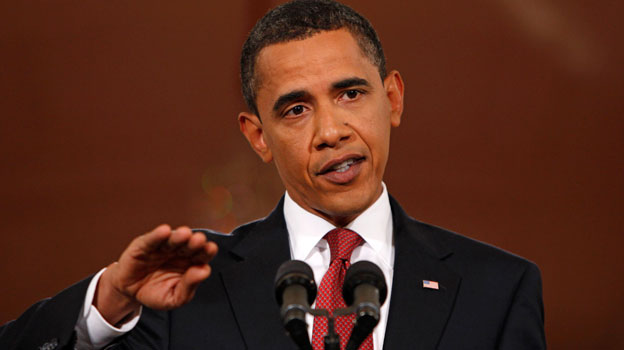 Obama health care has received mixed emotions from people all over the nation. Some are in favor, others feel that the government has completely taken control of their rights. For the middle class Americans, many believe Obama care will adversely affect themselves and the upper class. While it does make significant changes to our current system, every class will be affected in one way or another.
 way out as they attempt to pay for basic necessities such as childcare, food, housing, utilities, etc. In their minds, it they are already struggling to meet these obligations, how in the world can they afford health insurance? But if they don’t purchase it, according to Obama laws they will face penalties if they fail to get health insurance coverage.